A septic problem rarely announces itself with a single obvious cause. Slow drains could be a full tank or a genuinely failed field, and those two things call for completely different fixes at very different price points. Start with the signs, then narrow down the cause, then weigh repair against replacement. The local soil evidence along the way explains why Sedgwick County fields fail the way they do.
Read the yard: signs of septic trouble
- Sewage or effluent surfacing: wet, soggy ground over the drain field, or actual pooled liquid. This means the soil can no longer accept wastewater and typically signals complete field failure.
- Backups or slow drains: sewage backing up into the lowest fixtures in the house, or tubs, sinks, and showers draining unusually slowly.
- Odor: a sewage or sulfur smell around the tank, around the field, or indoors.
- A soggy or unusually green stripe over the field: lush, spongy grass even in dry weather, from effluent effectively fertilizing and irrigating the surface.
- Standing water or damp spots near the tank or field that don't match recent rainfall.
If several of these show up together, or right after a wet stretch, that's worth taking seriously; see When to call, below.
Diagnose the cause before you fix anything
A backup or slow drain can come from several different places, and the right fix depends entirely on which one it is:
- A full tank. The simplest cause: pump it.
- A clogged effluent filter. If the tank has one, a clogged filter restricts flow and can look like a bigger problem than it is; cleaning it is quick.
- A failed pump or float (on a pumped/pressure-dosed system). A mechanical failure, not a soil problem; the fix is a component repair.
- A crushed line or failed distribution box. Physical damage to the plumbing between the tank and the field, repairable without touching the field itself.
- A hydraulically failed field. The field itself can no longer accept effluent. This is the expensive branch, and it usually means a new field or a full system replacement.
Pumping and cutting back water use can buy time on a field that's stressed but not yet failed. Once the field has completely failed, a replacement field is what's needed, not another pump-out. Getting this diagnosis right before paying for a fix is the single biggest factor in whether a repair actually solves the problem.
Why fields fail on Sedgwick County's soil
This diagnostic ladder matters more here than in a market with easy soil. Every exurban soil point in the USDA survey data (outside Wichita's sewered city limits, where septic systems sit) rates "Very limited" for septic absorption fields, and every single one was limited by the same mechanism: slow water movement. The dominant soil, Rosehill silty clay, is a smectitic (shrink-swell) clay weathered from shale, running roughly 41–47% clay through the profile with shale bedrock as shallow as about 3 feet in places; the Blanket and Saltcreek-Naron series nearby carry similarly clay-heavy subsoils. That's a soil that simply accepts water slowly, which is the same underlying mechanism that causes a drain field to become hydraulically overloaded and fail: the field was already sized against a soil that struggles to absorb, so anything that adds to that burden (a clogged biomat, excess water use, or an aging field) has less room to work with before symptoms appear.
Layer roughly 34 inches of annual rainfall on top of that slow-draining clay, and you get a predictable pattern: fields that are borderline tend to show symptoms after a wet spell, when the soil around the field is already close to saturated and has even less capacity to accept more effluent. That pattern is the same slow-water-movement limitation showing up seasonally.
What's actually happening at the field when it fails
A drain field doesn't fail all at once. A thin biological layer, the biomat, forms where effluent meets native soil; it's a normal, even necessary part of treatment, filtering and digesting as wastewater passes through. The field is engineered so that layer and the unsaturated soil beneath it can still keep up with the daily flow. Trouble starts when solids that should have stayed in the tank escape into the field, when water use overloads the system, or when the field simply ages: the biomat thickens until it restricts infiltration, and university extension guidance is blunt about where that leads: solids that reach the field "clog the small spaces or pores in the gravel and soil below, resulting in sewage backing up into the house or surfacing in the yard." On Sedgwick County's slow-perc smectitic clay, that clogging process has less room to work with from the start, because the soil itself is already the bottleneck before any biomat buildup is added on top.
Repair vs. replace: the decision
Repair is the right call when the tank and field are fundamentally sound and the problem is a component: a broken baffle, a clogged filter, a failed pump, a crushed or root-invaded line, a bad distribution box. These are generally quicker and less expensive fixes.
Drain-field rejuvenation (jetting, aeration, or additive treatments marketed to restore a clogged field) is sold as a middle option, but its effectiveness is inconsistent and largely vendor-claimed. Treat longevity promises with skepticism; it is not a guaranteed substitute for replacement.
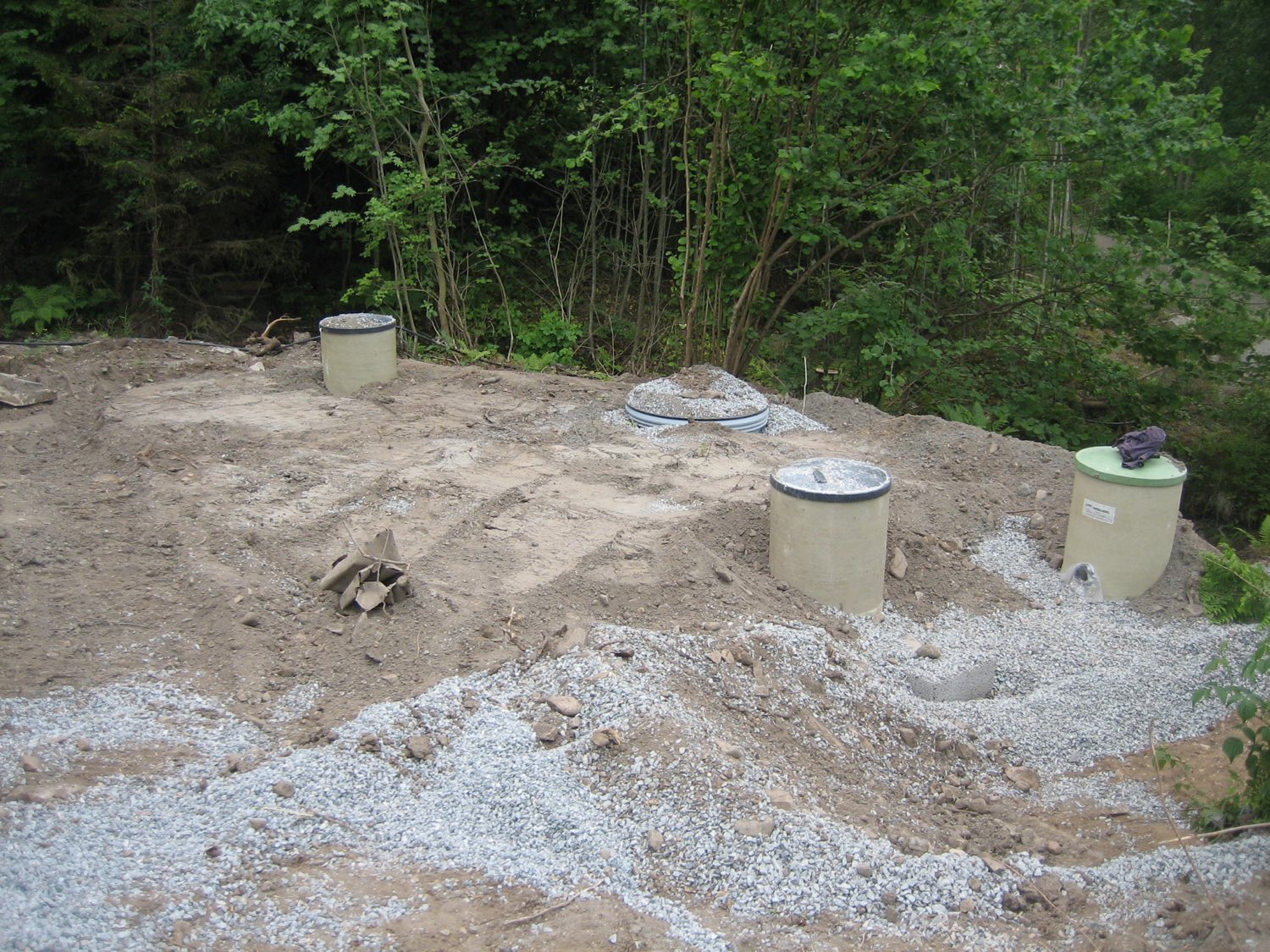
Replacement is what's needed once a field has genuinely and completely failed hydraulically. That usually means a new drain field on a freshly evaluated site (which typically requires a new soil evaluation and permit) or, in some cases, a full system replacement. This is the highest-cost branch of the decision tree; see installation & replacement for what that process looks like on Sedgwick County's soil, and septic costs for how the number is built.
When to call vs. when to keep an eye on it
A single mild symptom with an obvious explanation (heavy rain, unusually high water use that week) is worth watching before assuming the worst. But surfacing effluent, backups into the house, or symptoms that persist and recur after normal rain are worth a professional evaluation before they get worse. A field problem caught early is a smaller job than one left to progress to full failure.
Related: septic tank pumping for the maintenance that prevents most of this, why fields fail in Wichita for the fuller soil picture, and septic installation & replacement for the replacement path.